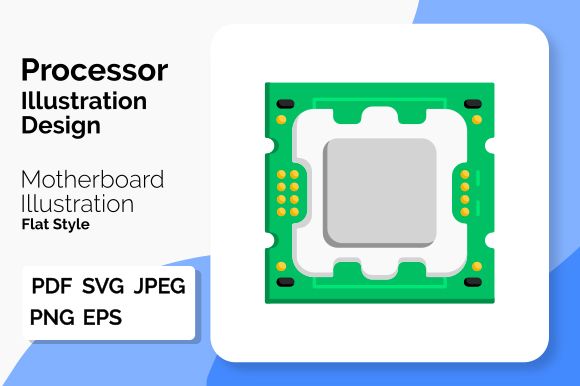
Flat Style Processor Illustration Design: Clean, Versatile, and Built for Impact
Flat design has become a go-to visual language for modern creatives, and when applied to processor illustrations, it delivers a powerful combination of clarity, professionalism, and adaptability. The Processor Illustration Design Flat Style is more than just a trend—it’s a design solution that bridges functionality with aesthetic appeal. Whether you're crafting a tech logo, designing a presentation, or laying out a product package, this style offers a clean, modern look that resonates across platforms and audiences.
What Makes Flat Style Processor Illustrations Stand Out
At its core, flat design strips away unnecessary embellishments like drop shadows, gradients, and textures. What you get with Processor Illustration Design Flat Style is a minimal, two-dimensional representation that focuses on clean lines, bold shapes, and consistent color palettes. This approach not only enhances legibility but also ensures the illustrations remain visually cohesive across various formats.
The style often features geometric shapes, uniform strokes, and a balanced use of negative space. These visual elements contribute to a sense of modernity and professionalism, making them ideal for both digital and print applications. Whether used in a mobile app interface or a printed infographic, these illustrations maintain their clarity and visual strength.
Where This Style Excels Across Design Projects
One of the standout features of Processor Illustration Design Flat Style is its versatility. Designers can confidently use these illustrations in a wide range of creative and commercial contexts:
- Website design – Enhance UI elements, hero sections, or feature graphics with a clean, scalable visual style.
- Logo design – Build a tech-forward brand identity with minimalist, recognizable visuals that scale beautifully.
- Icon sets – Use consistent, flat-style icons that maintain visual harmony across apps and platforms.
- Book layouts and editorial design – Integrate illustrations that support content without overwhelming the reader.
- Product packaging and branding – Create a modern, cohesive look that aligns with contemporary consumer expectations.
- Presentations and infographics – Communicate complex data and ideas visually with clarity and style.
- Background patterns and templates – Use scalable, repeatable elements that add visual interest without distraction.
This design style works particularly well when a project requires a clean, professional tone without sacrificing visual engagement. It’s especially effective in tech, education, and lifestyle industries where clarity and modernity are key brand values.
How Flat Style Illustrations Influence Design Perception and Engagement
Visual consistency plays a crucial role in how audiences perceive and interact with your content. The Processor Illustration Design Flat Style contributes to a strong visual hierarchy, helping guide the viewer’s eye and reinforce brand messaging. Because of its simplicity, this style enhances readability and ensures that the core message isn’t lost in visual noise.
From a branding perspective, consistent use of flat-style illustrations helps build brand recognition. When used across websites, social media, and marketing materials, these visuals create a unified brand identity that feels intentional and polished. This level of consistency can elevate a brand from looking like a side project to a professional, well-thought-out business.
Additionally, because flat design is inherently clean and uncluttered, it supports accessibility. High contrast and clear shapes make these illustrations easier to interpret, especially for users with visual impairments or those viewing content on smaller screens.
Choosing and Using Flat Style Processor Illustrations Effectively
When selecting a Processor Illustration Design Flat Style set for your project, consider the following practical factors:
- Purpose and platform – Will the illustrations be used on a website, in print, or as part of a mobile app? Choose formats that scale well and maintain quality across different resolutions.
- Format availability – Look for sets that include SVG, PDF, Transparent PNG, JPEG, and EPS10 files to ensure flexibility across design tools and output needs.
- Color flexibility – Flat illustrations often use solid fills, so make sure the color palette can be easily adjusted to match your brand or layout.
- Style consistency – If you’re mixing illustrations with other design assets, ensure they share a similar visual language to avoid a disjointed look.
- Licensing clarity – Always verify that the illustrations come with a clear commercial license, especially if you plan to use them in client work or product designs.
Before finalizing your choice, test the illustrations in actual project mockups. See how they perform at different sizes and against various backgrounds. Also, consider how they pair with your chosen typography—flat visuals often work best with modern sans-serif fonts, but don’t be afraid to experiment with contrast for visual interest.
Real-World Applications and Design Tips
Here are a few practical examples of how to make the most of Processor Illustration Design Flat Style:
- Web banners and landing pages – Use flat-style illustrations to break up text-heavy sections and guide the viewer’s focus toward key CTAs.
- Educational infographics – Combine flat visuals with concise data to explain technical processes in an engaging, easy-to-digest format.
- Mobile app icons and UI elements – Maintain visual harmony across your app by using a consistent flat illustration style for all interface graphics.
- Printed marketing collateral – Incorporate these illustrations into brochures or packaging to create a clean, modern brand presence.
- Social media templates – Build a cohesive visual identity across platforms by using the same illustration style in your graphics and posts.
Remember, flat design doesn’t have to be boring. You can add subtle variations in color, scale, and layout to keep the visuals engaging while still maintaining a clean aesthetic. Also, consider layering flat illustrations with semi-transparent overlays or subtle textures if you want to add depth without losing the minimalist appeal.