A Greeting Method to Avoid the Spread: Rethinking Social Interaction in a Post-Pandemic World
In a world still navigating the ripple effects of the global pandemic, social norms are shifting. One of the most visible and immediate changes has been in how we greet each other. Traditional greetings—handshakes, hugs, and cheek kisses—have taken a backseat to safer, more hygienic alternatives. This shift isn't just a temporary precaution; it's evolving into a more permanent change in how people interact, especially in professional, creative, and public environments.
The Rise of Non-Contact Greetings
The concept of a greeting method to avoid the spread of illness, particularly respiratory diseases like COVID-19, has moved from being a public health directive to a mainstream cultural adaptation. What began as a necessity during lockdowns and social distancing has now become a preferred practice for many. Non-contact greetings—such as the wave, the elbow bump, and the now-iconic "namaste" gesture—are gaining traction not only for their safety benefits but also for their universal appeal and simplicity.
This evolution in greeting customs reflects broader changes in how people perceive personal space, hygiene, and social etiquette. In professional settings, for example, many individuals have become more conscious of physical boundaries, and businesses are adapting by promoting health-conscious practices as part of their workplace culture.
Designing for a New Normal: Visual Communication and Greeting Illustrations
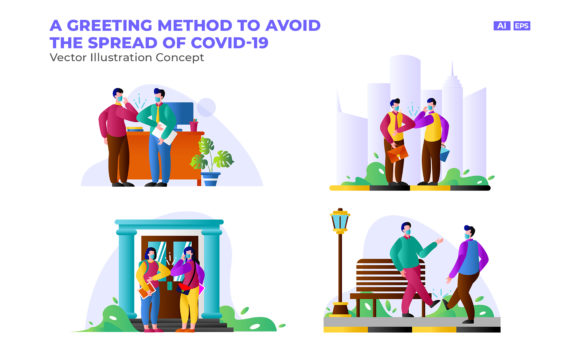
Visual communication has always played a crucial role in shaping public behavior. With the rise of non-contact greetings, designers and illustrators are responding by creating modern, flat vector illustrations that reflect these new norms. These visuals are not only informative but also adaptable—perfect for websites, mobile interfaces, presentations, and social media banners.
A greeting method to avoid the spread is more than just a behavioral change—it's a visual message that needs to be communicated clearly and consistently. Flat vector illustrations offer a clean, modern aesthetic that aligns with current design trends. They are scalable, editable, and compatible with tools like Adobe Illustrator, making them ideal for creators who need flexibility in their workflow.
- Vector graphics can be resized without loss of quality, making them suitable for both mobile and desktop interfaces.
- Each element can be recolored or restructured, allowing for customization to match brand identities or regional preferences.
- Designers can mix and match components to create unique compositions that reinforce the message of safe interaction.
Why This Trend Matters for Designers and Businesses
As businesses and organizations continue to emphasize health and safety, visual content that reflects these values becomes essential. From healthcare providers to tech startups, companies are incorporating non-contact greetings into their branding, training materials, and customer-facing communications. This trend extends beyond static websites and into dynamic digital experiences, including mobile apps and UI design.
For creators and marketers, the ability to visually represent a greeting method to avoid the spread means aligning with contemporary expectations. It’s not just about aesthetics—it’s about relevance. Users today expect digital content to reflect real-world practices, and visuals that include updated greeting norms help build trust and familiarity.
Consider the impact of a well-designed infographic on workplace safety, or a mobile app screen that gently guides users through a touch-free interaction. These small but meaningful design choices can influence user behavior and perception, reinforcing a culture of care and consideration.
From Temporary Measure to Lasting Practice
While the initial push for non-contact greetings came from the urgency of the pandemic, their continued use suggests a deeper cultural shift. People are more aware of how germs spread, and many have found that alternatives like the wave or hand-over-heart are not only safer but also more inclusive and universally understood.
This shift is especially relevant in multicultural and international environments, where physical greetings can vary widely and sometimes cause discomfort or misinterpretation. A greeting method to avoid the spread offers a neutral, respectful alternative that can bridge cultural and generational divides.
- Elbow bumps and waves are easy to perform and universally recognized.
- They reduce the risk of transmitting germs while maintaining a sense of warmth and connection.
- These gestures can be adapted across age groups and professional fields.
Practical Applications Across Industries
Education, healthcare, hospitality, and even entertainment have all been influenced by the need for safer interactions. Schools are teaching children new ways to greet peers without physical contact. Hospitals have implemented visual signage to guide patients and staff toward non-contact greetings. Even in the creative industries, illustrators and UI designers are integrating these gestures into their work to reflect the times.
For example, a freelance designer working on a wellness app might use a flat vector illustration of a person greeting with a smile and a wave. A marketing team launching a campaign around workplace health could feature animated greetings in their social media posts. These applications are not just functional—they’re also expressive, helping brands connect with audiences in a more authentic way.
How to Incorporate These Elements Into Your Work
If you're a designer, content creator, or business owner, integrating a greeting method to avoid the spread into your visuals can be both strategic and impactful. Here are some practical tips:
- Use vector illustrations that reflect modern greeting styles in your website headers, banners, and promotional materials.
- Customize visuals to match your brand’s color palette and tone. Since all elements are 100% vector, you can easily adjust colors and shapes.
- Create variations of the same greeting to keep visuals fresh across different platforms and campaigns.
- Pair illustrations with short, clear messaging that reinforces the importance of safe interactions.
By incorporating these elements thoughtfully, you not only stay aligned with current trends but also contribute to a more inclusive and health-conscious digital environment.
Looking Ahead: The Future of Greeting Design
As society continues to evolve post-pandemic, the way we greet each other—and how we visually represent those greetings—will continue to change. Designers are uniquely positioned to lead this shift by creating visuals that reflect modern values: safety, inclusivity, clarity, and adaptability.
A greeting method to avoid the spread may have originated as a response to a global health crisis, but its influence extends far beyond that. It represents a broader movement toward mindful interaction, where digital design plays a key role in shaping behavior and communication. Whether you're building a website, designing an app interface, or creating educational content, understanding and applying these principles can make your work more relevant and resonant.
Ultimately, the most effective designs are those that serve both form and function. By embracing updated greeting norms in your visual storytelling, you're not only keeping up with the times—you're helping to shape them.